Given the constraints faced by national authorities, there is growing recognition among scholars and policymakers of the insufficiency of national-level interventions as the sole mechanism for managing peace and security. Local violence, often manifesting in ethnic clashes, resource-based disputes, or community mobilisation through armed groups, frequently escapes the reach or adequate under-standing of national governments. Similarly, conflicts with transnational features, such as cross-border insurgencies, trafficking, and refugee flows, necessitate regional coordination to prevent spillovers and to mount coherent responses. Regional organisations, due to their geographical and political proximity, provide frameworks for collective action and normative enforcement that transcend state boundaries. Local actors, simultaneously, embody contextual knowledge, legitimacy, and direct stakes in peace building, which are crucial to achieving sustainable outcomes. Thus, multi-tiered engagement encompassing local ownership complemented by national and regional partnership has emerged as a preferred paradigm for addressing the layered peace and security challenges in West Africa.
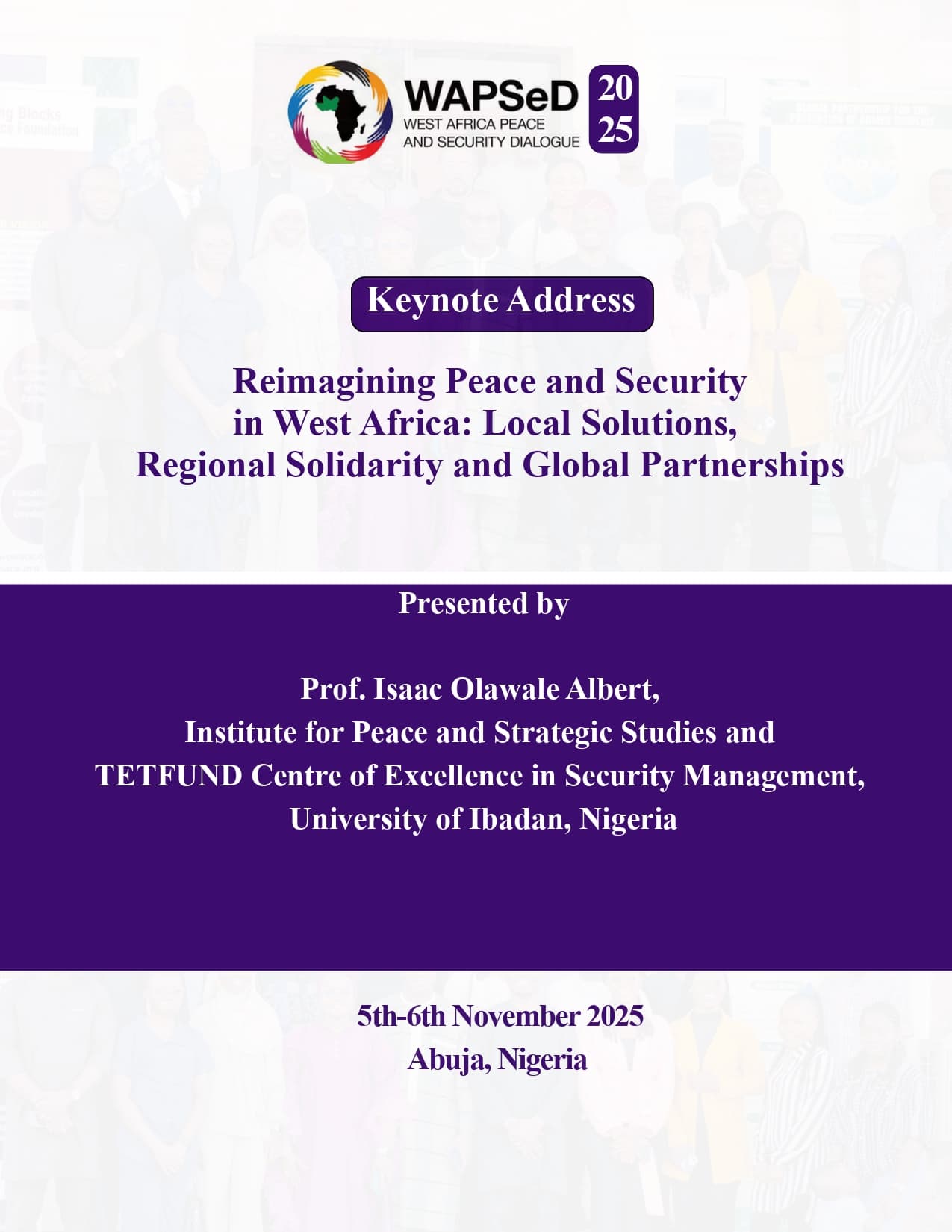
Research Paper
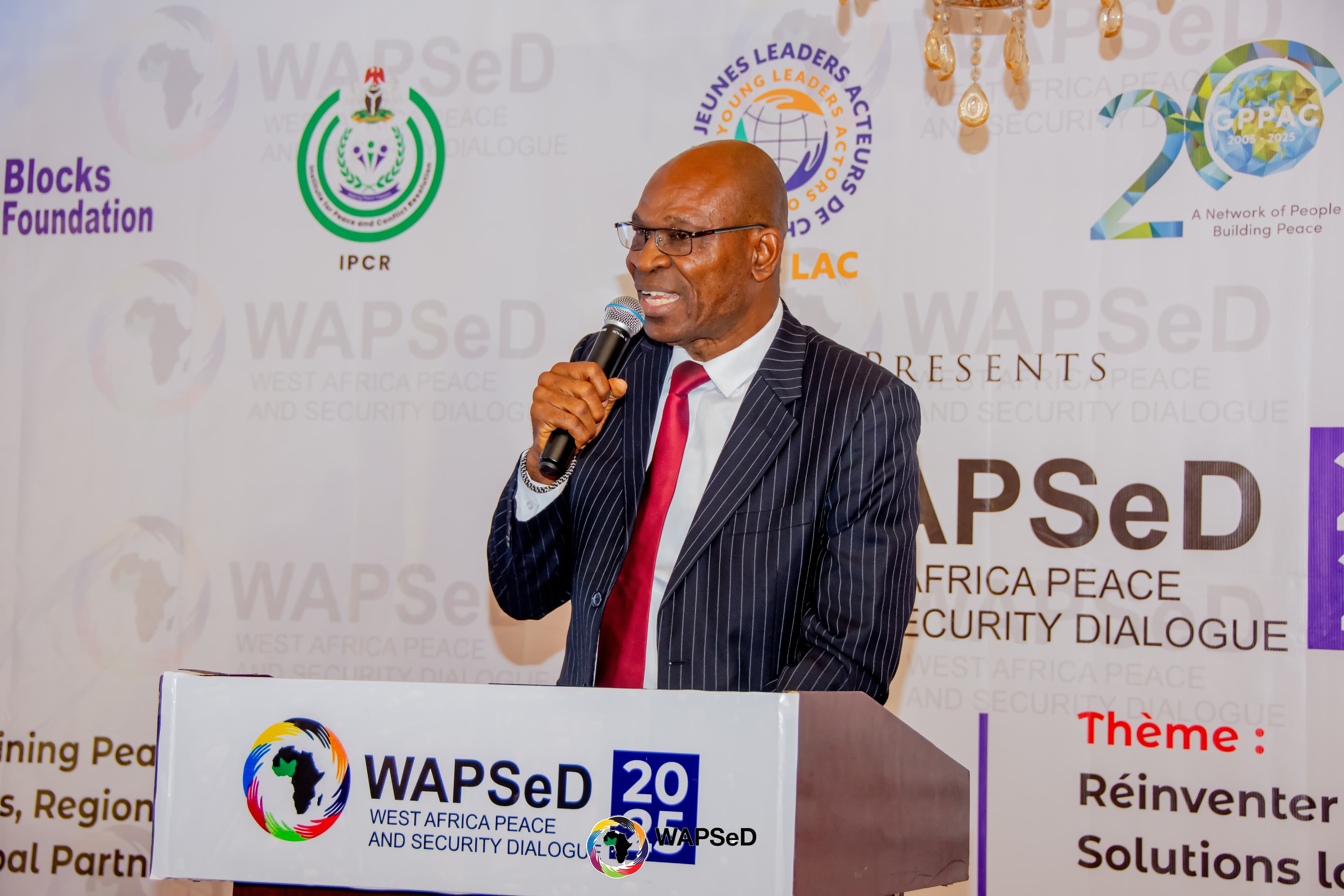
Keynote Address Delivered by Prof. Isaac Olawale Albert at the West Africa Peace and Security Dialogue (WAPSED) 2025
More Publications
Related Resources
2024research
WAYPAN Regional Assessment Report
Assessment of youth protection mechanisms across West Africa, including policy recommendations for strengthening youth participation.
download 4 times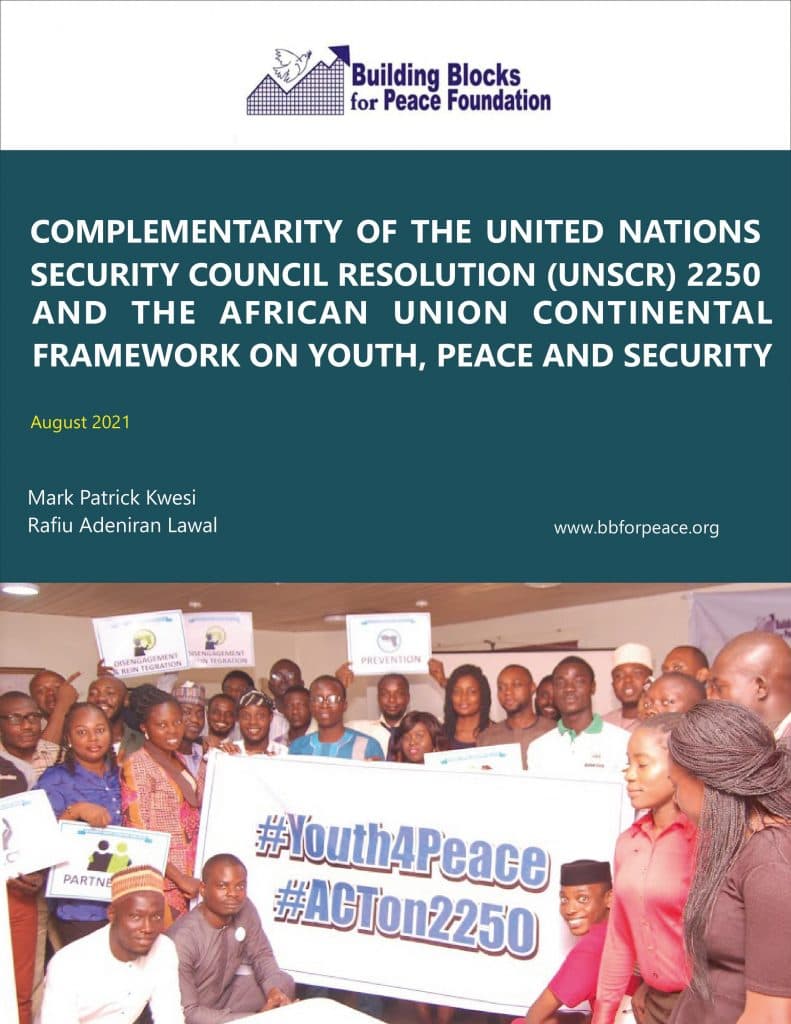
2023research
Complementarity of UNSCR 2250 and AU Continental Framework on Youth, Peace and Security
Examining alignment between UNSCR 2250 and AU Continental Framework.
download 4 times