From Dialogue to Action: Reflection on the 5th Continental Dialogue on Youth, Peace and Security in Africa
Written by
Samson Sbabu- Project Officer, Building Blocks for Peace Foundation/Co-Chair, GPPAC Working Group on Youth, Peace and Security
Africa does not lack young people, ideas, or commitment to peace. What we continue to grapple with is the gap between being heard and being trusted, between participation and influence, and between policy commitments and meaningful action.
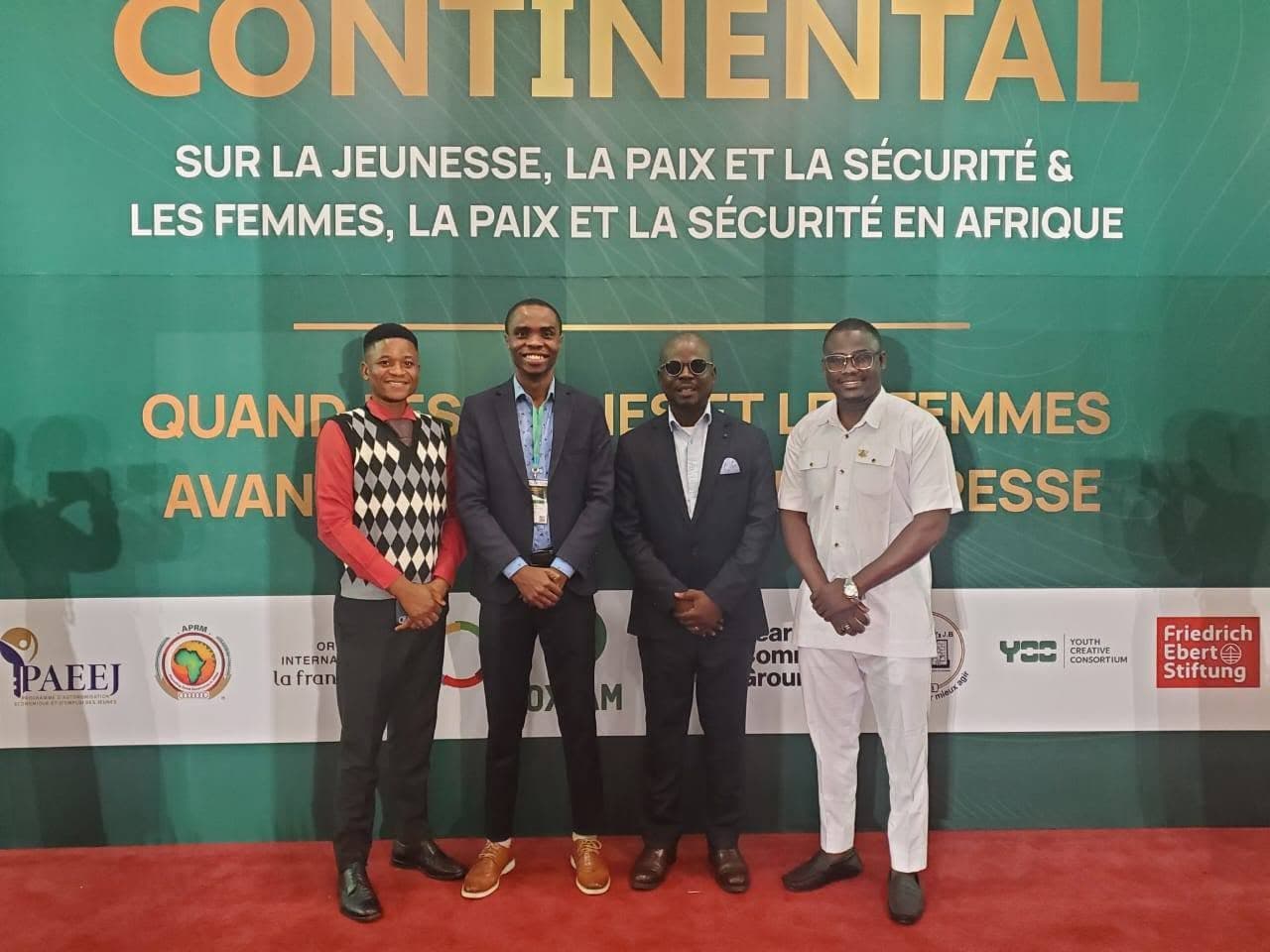
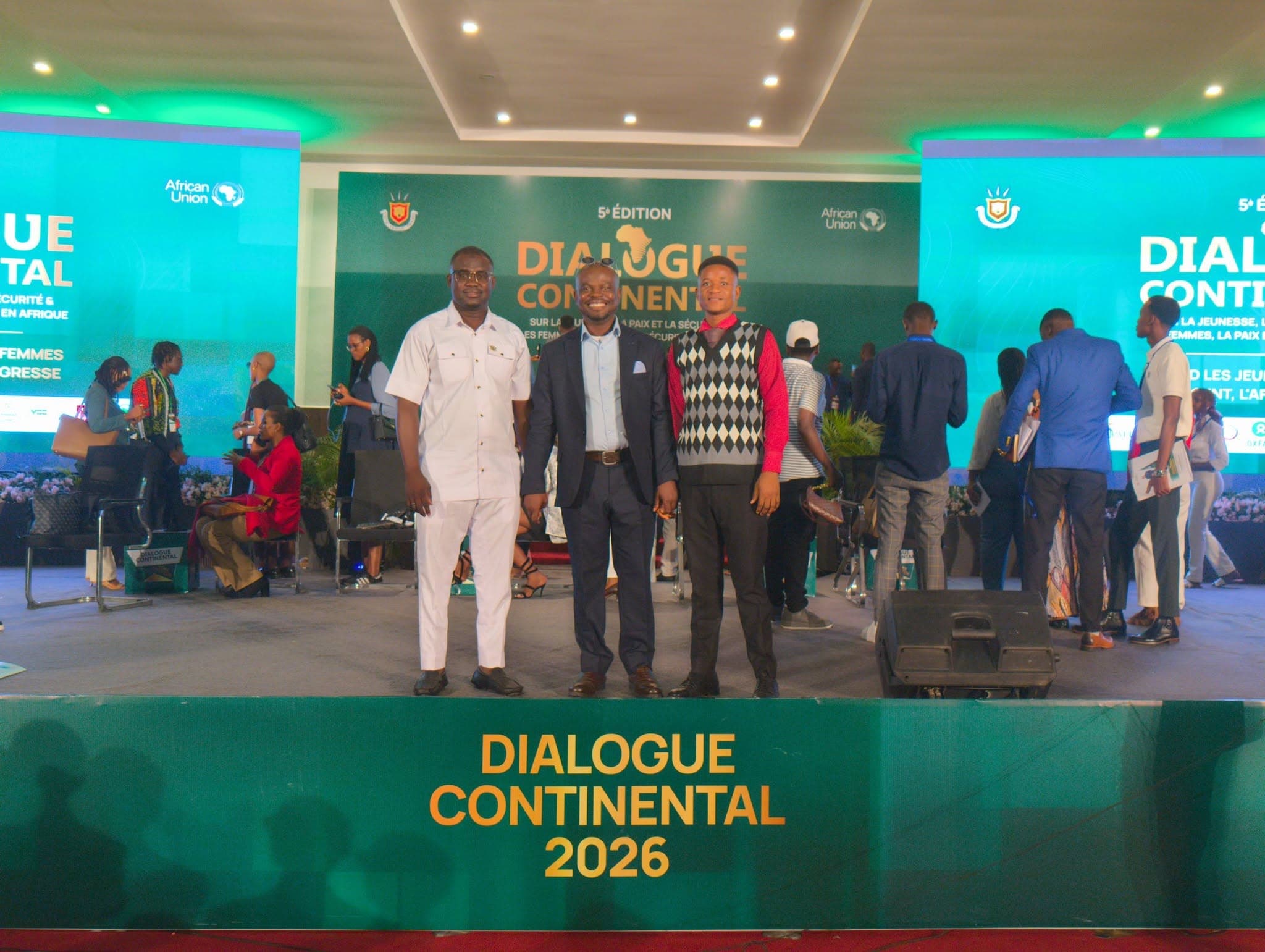
From 10 - 12 August 2026, I participated in the 5th Continental Dialogue on Youth, Peace and Security in Africa and the Women, Peace and Security Forum, held in Bujumbura, Burundi. The dialogue, convened under the theme “Water, Peace and Inclusive Leadership in Africa: institutionalising the strategic role of youth and women in conflict prevention, crisis management and the sustainable consolidation of peace through responsible resource governance,” brought together young people, women leaders, policymakers, civil society actors, regional and continental institutions, and other stakeholders to interrogate the future of peace and security in Africa.
As one of the delegates supported by the Building Blocks for Peace Foundation, the regional secretariat of the Global Partnership for the Prevention of Armed Conflict (GPPAC) in West Africa through the The "Connection for Peace: Powerful Local Peacebuilding and Policies" project funded by the Ministry of Foreign Affairs of Netherlands, this opportunity was more than attending another international conference. It was an opportunity to step outside Nigeria's YPS space, listen to experiences from across the continent, and critically examine some of the assumptions that have shaped my own engagement with the Youth, Peace and Security agenda.
I went into the dialogue with a degree of scepticism that the dialogues could be an elaborate jamboree where young people are invited, photographed, celebrated and given an opportunity to speak, but where the difficult questions about power, influence, resources and accountability are left largely untouched. The dialogue did not completely fit that expectation. While there were certainly ceremonial and celebratory elements, some of the conversations went beyond the usual language of “young people are the leaders of tomorrow.” The discussions interrogated what youth participation actually means and, more importantly, what happens when participation moves beyond consultation.
This distinction became particularly important to me. Young people are frequently described as indispensable actors in peace and security. We are told that our voices matter, that we are agents of change, and that peace processes must be inclusive. Yet recognition is not the same as influence. Being invited into a room does not necessarily mean having power in that room. Participation becomes meaningful when young people can shape decisions, question existing approaches, propose alternatives, exercise responsibility and, ultimately, see a connection between what they contribute and what is decided.
The uncomfortable question of the table
As someone working to advance the YPS agenda in Nigeria, I found myself interrogating my own participation. Why are young people constantly invited to consultations with the expectation that we will influence what happens at the table, when many of us already possess the capacity to sit at the table and fulfil the responsibilities that come with being there?
This question became even more uncomfortable when I considered the different spaces that are created specifically for young people. When a seat is created for young people, what is the motivation? Did young people demand it? Is it because institutions genuinely recognise the competence and contribution of young people? Is it intended to redistribute decision-making power? Or is it simply designed to fulfil “all righteousness”, to demonstrate that young people were consulted, satisfy a donor requirement, or tick the youth inclusion box? These questions are not an argument against consultation. Rather, they are an argument for moving beyond consultation.
The challenge for the YPS movement is to ensure that youth participation is not reduced to presence. The ultimate measure should be whether young people are able to influence policy, shape institutions, participate in implementation, access resources and hold decision-makers accountable. For organisations such as BBFORPEACE and networks such as GPPAC, this is an important area of continued work. Our responsibility cannot end with creating spaces for young people to speak. We must also continue building the structures, capacities and relationships that enable young people to exercise meaningful influence within peace and security systems.
From plans to implementation: will the Benue YPS framework be implemented?
Perhaps the conversation that resonated most deeply with me was the emphasis on implementation and financing. Across Africa, there has been growing interest in developing National Action Plans and other policy frameworks for Youth, Peace and Security. The development of these frameworks is important. They provide governments and stakeholders with an institutional roadmap for translating the principles of UNSCR 2250 and the broader YPS agenda into national action. But a difficult question remains: What happens after the document is launched?
This question has become particularly personal for me because of my work on the localization of the Youth, Peace and Security framework in Benue State, Nigeria. As one of the actors driving this process, I have been involved in efforts to translate the YPS agenda from an international and national policy conversation into something that speaks to the realities of young people at subnational and community levels. The work has reinforced a fundamental truth: a policy framework does not automatically produce change.
A beautifully written action plan sitting on a government shelf does not prevent violent extremism. It does not create employment for conflict-affected young people. It does not strengthen early warning systems. It does not give young women meaningful access to peace processes. It does not rebuild trust between communities and institutions. Implementation does. And implementation requires resources. This is why the question that has continued to trouble me throughout the Benue localization process is not whether we have the capacity to implement the framework. It is whether the necessary resources will eventually be allocated to implementation. The concern is not necessarily about the absence of resources in society. It is about political prioritisation and intentional allocation.
This concern also informed an intervention I made during the recent global YPS dialogue in Kazakhstan. I argued that governments, UN agencies and development partners supporting YPS Action Plans should commit at least 5% of the estimated implementation cost upfront before the plan is adopted. To be honest, I initially proposed something more ambitious. My colleagues eventually persuaded me to lower my gaze to 5%. But the principle remains the same. If we are serious about YPS, we must begin to treat financing as part of the policy process rather than something to be discussed after the policy has been adopted.
Too often, policy development follows a familiar sequence: Consult → Draft → Validate → Adopt → Launch → Celebrate → Search for funding. Perhaps we need to rethink this. Consult → Cost → Identify resources → Commit resources → Adopt → Implement → Monitor → Account. This would fundamentally change the meaning of an Action Plan. The future of YPS will not be determined by how many action plans Africa produces. It will be determined by how many young people experience meaningful improvements in their lives because those plans were intentionally resourced and implemented.
Water, YPS, WPS and climate security cannot continue to be discussed separately
Another feature of the dialogue that I found particularly commendable was the way it brought together issues that are often treated as separate policy conversations: Water, Governance, YPS, WPS, Climate security, Leadership, Peacebuilding, among others. The central theme of the dialogue itself reflected this integrated approach, while one of the major panels specifically examined the relationship between water access, YPS and WPS. The programme recognised that competition over scarce water resources intensify tensions and conflict, while women and young people experience distinct vulnerabilities and are also important actors in resilience and conflict prevention.
This nexus is particularly relevant to my own work on Climate, Peace and Security at BBFORPEACE. In Nigeria, particularly in conflict-affected communities, climate and environmental pressures do not operate in isolation from peace and security challenges. Changes in access to land, water and other natural resources interact with livelihoods, displacement, migration, governance failures and existing communal tensions.
This means that our peacebuilding interventions must become increasingly integrated. We cannot discuss youth peacebuilding without discussing livelihoods. We cannot discuss livelihoods without discussing environmental and climate pressures. We cannot discuss climate security without discussing governance. We cannot discuss governance without discussing the participation of young people and women. And we cannot discuss any of these without asking who controls resources, who has access to them and who gets to participate in decisions about them. This interconnectedness is one of the areas where I see significant value in the work of BBFORPEACE and GPPAC. Our peacebuilding approaches must continue to break down artificial boundaries between thematic areas if we are to respond effectively to the realities confronting communities.
Technology presents both an opportunity and a responsibility
The dialogue also examined the role of emerging technologies and artificial intelligence in advancing YPS and WPS. The programme highlighted both the opportunities created by digital transformation and the inequalities and risks associated with unequal access, digital exclusion, disinformation and misuse of emerging technologies.
I found this particularly important because the future of youth peacebuilding will increasingly be digital. Technology can strengthen early warning and early response systems. It can improve access to information, expand civic participation, facilitate evidence-based policymaking and create new opportunities for young people to organise around peacebuilding.
But technology can also reproduce existing inequalities. A young person who cannot access reliable internet, digital education or technological tools cannot participate equally in an increasingly digital peace and governance ecosystem. At the same time, young people are both consumers and producers of digital information. This places a responsibility on YPS actors to think more seriously about digital literacy, responsible technology, online hate speech, disinformation and the use of AI in conflict prevention.
The question should therefore not simply be: How can young people use technology for peace? It should also be: Who has access to the technology, who controls it, who is excluded from it, and what safeguards exist against its misuse?
The African Youth Charter at 20: from promise to prosperity
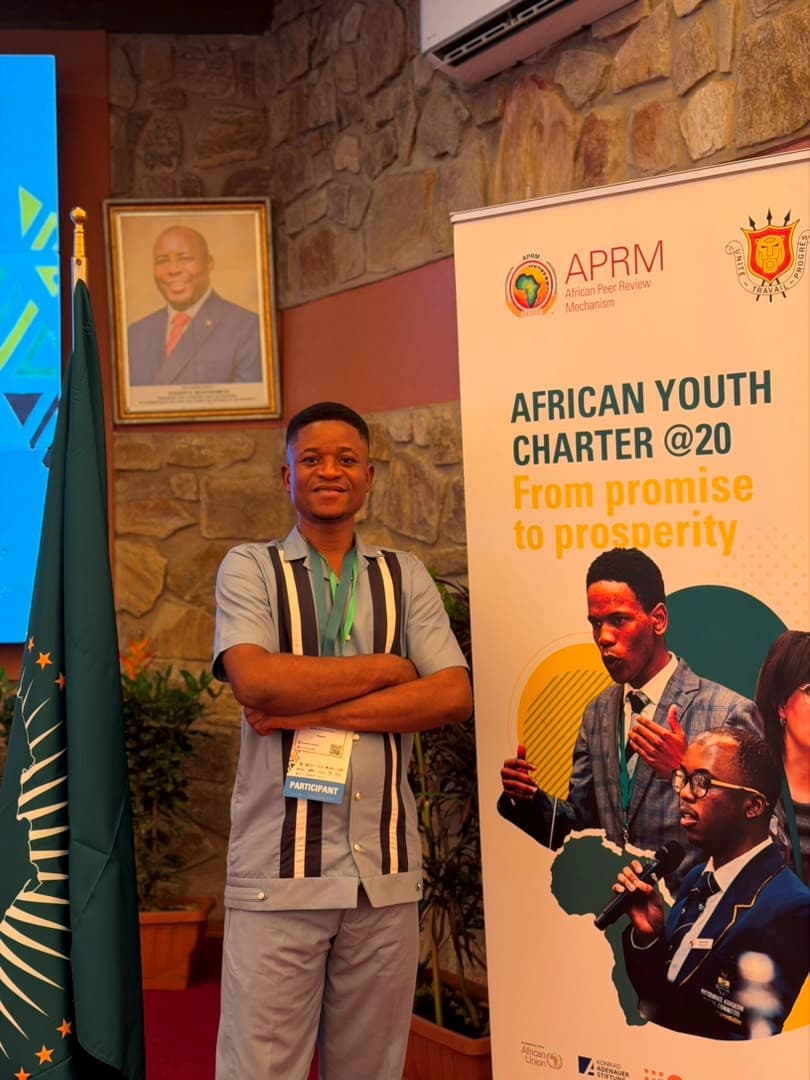
Among the four parallel side events, I participated in “The African Youth Charter at 20: From Promise to Prosperity,” organised by the African Peer Review Mechanism, the AU Youth Division and the Pan-African Youth Union.
The session provided an opportunity to reflect on the journey of the African Youth Charter, including its promise and continuing relevance to young people across the continent. For me, the significance of the conversation was not simply that the Charter has existed for two decades. The more important question is what has happened to the commitments contained within it? Twenty years is long enough to ask whether commitments have translated into institutions, opportunities, resources and tangible improvements in young people's lives.
This connects directly to my earlier reflections on YPS Action Plans. Africa does not necessarily suffer from a shortage of policy commitments. The bigger challenge is often the distance between commitment and implementation. The anniversary of the African Youth Charter therefore offers an opportunity not only to celebrate what has been achieved, but also to ask what must change if the next twenty years are to produce greater prosperity, participation and political influence for young Africans.
From ideas to visible innovation: young people as creators
The dialogue also created space to showcase the entrepreneurial and creative capacity of young people in Burundi. The presentation of the projects of the ten laureates of the INKEREBUTSI competition was particularly significant. Rather than discussing young people exclusively through the language of vulnerability, unemployment, conflict or exclusion, the programme provided a platform to see young people as innovators, entrepreneurs and problem-solvers.
For me, this was important because the way institutions frame young people often determines the kind of interventions they design. If young people are seen primarily as beneficiaries, institutions design programmes for them. If young people are seen as risks, institutions design programmes to manage them. But if young people are recognised as innovators and partners, institutions begin to ask how they can invest in, support and scale what young people are already creating.
The presence of the President and other partners during the showcase created an opportunity for these innovations to receive visibility and potentially attract further support. This is the kind of youth inclusion I would like to see more frequently: not simply giving young people microphones, but creating pathways through which their ideas can receive capital, institutional support, mentorship, markets and opportunities to scale.
The Bujumbura Declaration and the future of integrated peacebuilding
The dialogue culminated in the adoption of the Bujumbura Declaration 2026, which, from my understanding of the outcomes, provides a framework for strengthening the institutionalisation of youth and women in governance while advancing water-based peacebuilding approaches and connecting YPS, WPS and climate-security priorities.
This is an important direction. For too long, Africa's peace and security architecture has sometimes treated these agendas as separate compartments. But communities do not experience problems in compartments. A young woman affected by conflict may simultaneously experience insecurity, displacement, unemployment, climate stress, lack of access to water, exclusion from decision-making and limited access to justice.
Why, then, should our policy responses be fragmented? An integrated approach allows us to see the person and the community rather than merely the policy category. The real test, however, will once again be implementation. The declaration, like every other continental commitment, will ultimately derive its legitimacy not from the quality of its language but from the extent to which its commitments translate into action at national, subnational and community levels.
President Ndayishimiye's presence: a positive political signal
One of the strongest personal impressions I took away from Bujumbura was the sustained presence of President Évariste Ndayishimiye throughout the dialogue. The President was not simply present for an opening ceremony and then absent for the substantive discussions. He remained actively engaged across the three days of the programme, which included substantive dialogue sessions, thematic discussions and the closing activities.
The agenda itself positioned him as the African Union Champion for Youth, Peace and Security and showed his participation in both the opening and closing of the dialogue.
For me, this was significant. In a continent where youth issues are sometimes relegated to the margins of political conversations, the sustained presence of a sitting African president sends a powerful signal about the political importance attached to the agenda.
Of course, presence alone does not equal policy impact. Political commitment must eventually translate into budgets, institutions, programmes and measurable outcomes.
But political attention matters. The willingness of a head of state to invest significant time in a continental conversation about young people, peace and security gives reason for optimism. It demonstrates that YPS can occupy political space at the highest level. My hope is that this level of political visibility will increasingly be matched by institutionalisation and resourcing across the continent.
Conclusion: What I am taking back to Nigeria
I returned from Bujumbura with more questions than answers, and I consider that a good thing. The dialogue challenged me to rethink what meaningful youth participation should look like. It challenged me to think beyond the production of policies towards their financing and implementation. It reinforced the importance of connecting YPS with WPS, climate security, natural resource governance and other dimensions of peace and security. And it challenged me to think about my own role, not merely as someone participating in YPS spaces, but as someone with a responsibility to help make those spaces more consequential.
As I continue supporting the localization of the YPS framework acros Nigeria, I am returning with a stronger conviction that adoption cannot be the finish line. For me, the real work begins after adoption. It is about ensuring that young people in Benue can see themselves reflected in the framework and, more importantly, experience its implementation. It is about encouraging government institutions to take ownership. It is about advocating for dedicated resources. It is about building accountability mechanisms. It is about ensuring that young women, young men, young people with disabilities, displaced young people and other marginalised groups are not merely consulted but have meaningful influence. And it is about demonstrating that YPS is not another international policy vocabulary but a practical framework for addressing the realities that young people face every day.
My experience in Bujumbura has therefore strengthened my commitment to a YPS agenda that moves beyond representation to influence; beyond consultation to co-creation; beyond policy adoption to implementation; and beyond rhetoric to resourcing. This is also the kind of peacebuilding that I believe BBFORPEACE and GPPAC must continue to champion: peacebuilding that sees young people not as passive beneficiaries of peace, but as political actors, community leaders, innovators and partners in shaping the systems that determine their future.